Jan Dhan scheme continues to expand financial inclusion
Jan Dhan accounts cross 58 crore mark, bringing banking services to millions across India
- By Gurmehar --
- Monday, 08 Jun, 2026
India has achieved another major milestone in financial inclusion as the number of Pradhan Mantri Jan Dhan Yojana (PMJDY) accounts has crossed 58 crore. The announcement was made by Union Finance Minister Nirmala Sitharaman, who highlighted the scheme's role in connecting millions of people, especially the poor and those living in rural areas, to the formal banking system.
Launched on August 28, 2014, the Pradhan Mantri Jan Dhan Yojana was introduced with the aim of ensuring that every household in India has access to banking services. Over the years, the scheme has grown into one of the largest financial inclusion programmes in the world. It has helped people who previously had little or no access to banking facilities open bank accounts and become part of the country's financial system.
The crossing of the 58-crore mark is being seen as a major achievement because it reflects how banking services have reached even the most remote corners of the country. The scheme has played a significant role in helping millions of people save money, receive government benefits directly and access basic financial services.
A major step towards financial inclusion
According to information shared by the Finance Minister's office, nearly 94 per cent of India's adult population now has access to a bank account. This indicates a remarkable increase in banking coverage since the launch of the scheme.
One of the most notable aspects of the Jan Dhan Yojana is its success among women and rural populations. Women account for approximately 56 per cent of all Jan Dhan account holders. This means that more than half of the beneficiaries are women, reflecting the scheme's contribution towards financial empowerment.
The scheme has also achieved strong penetration in rural and semi-urban regions. Around 67 per cent of Jan Dhan accounts have been opened in these areas. For many people living in villages and small towns, these accounts have become their first connection to formal banking services.
Before the launch of Jan Dhan Yojana, many people depended on cash transactions and informal financial systems. Access to savings accounts, insurance facilities and government benefits was often limited. The scheme has helped bridge this gap by bringing banking services closer to ordinary citizens.
Financial experts believe that greater access to banking services can improve financial security, encourage savings and reduce dependence on informal lenders. The scheme has therefore played an important role in improving the financial health of millions of households.
Another major achievement of the programme has been its support for digital payments. By providing account holders with banking facilities and debit cards, the scheme has encouraged greater participation in India's digital economy. This has become particularly important as digital transactions continue to grow across the country.
The government has also used Jan Dhan accounts to deliver welfare benefits directly to beneficiaries. This has helped reduce delays and ensured that assistance reaches the intended recipients more efficiently.
ALSO READ: Singapore blocks online content targeting Indians to protect racial harmony
ALSO READ: Influencer’s missing dog was stolen, sold and killed despite ₹1.4 lakh reward offer
Benefits available to account holders
One of the key reasons behind the success of the Jan Dhan scheme is the range of facilities available to account holders. The scheme is designed to make banking accessible and useful for people from all economic backgrounds.
A major benefit is the zero-balance facility. Unlike many traditional bank accounts, Jan Dhan account holders are not required to maintain a minimum balance. This allows even low-income individuals to keep their accounts active without worrying about penalties.
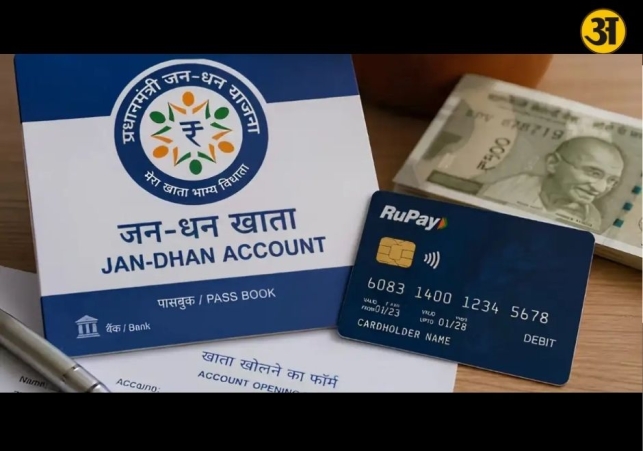
Account holders are also provided with a free RuPay debit card. This card can be used for withdrawing cash from ATMs, making purchases and conducting digital transactions. The availability of the debit card has encouraged greater participation in cashless transactions and digital payments.
Another important feature is the accidental insurance cover linked to the RuPay card. This provides financial protection to account holders and their families in case of accidental death or disability, subject to the scheme's terms and conditions.
Jan Dhan accounts also offer an overdraft facility. This allows eligible account holders to withdraw money even if there is insufficient balance in their account. Under the scheme, an overdraft of up to Rs 10,000 can be accessed during emergencies or financial difficulties.
The government believes that these features make the accounts more than just savings accounts. They provide a financial safety net and help account holders manage unexpected expenses.
Finance Minister Nirmala Sitharaman also highlighted the role of Jan Dhan accounts in reducing corruption and improving transparency. Through the Direct Benefit Transfer (DBT) system, government welfare payments are deposited directly into beneficiaries' accounts.
According to the government, around Rs 45 lakh crore has been transferred through DBT over the years. Direct transfers help eliminate middlemen and reduce the chances of leakages in welfare schemes. As a result, beneficiaries receive the full amount intended for them.
The Jan Dhan Yojana has become a key pillar of India's financial inclusion efforts. By combining banking access with insurance, digital payment facilities and direct benefit transfers, the scheme has transformed how millions of people interact with the financial system.
As the number of Jan Dhan accounts continues to rise beyond 58 crore, the programme remains an important tool for empowering citizens, improving financial security and ensuring that the benefits of economic growth reach every section of society. The latest milestone highlights the continuing success of the initiative and its growing impact on the lives of millions of Indians.
Related News